


Kenya & Tanzania Combined Safari: The Ultimate East Africa Itinerary for 2026
- cheetahsafaris3
- May 26
- 8 min read
East Africa has a way of stopping you in your tracks. The scale of the landscape, the silence of the bush at dawn, the moment a lion locks eyes with you from ten metres away these are experiences that stay with you long after the trip is over. Now imagine experiencing all of that, but doubled. Two countries, two iconic ecosystems, one seamlessly connected safari journey.
A Kenya and Tanzania combined safari is widely regarded as the gold standard of African wildlife travel. It lets you experience the legendary Masai Mara alongside the boundless Serengeti, the elephant paradise of Amboseli against the volcanic wonder of the Ngorongoro Crater, and the untamed northern wilderness of Samburu before descending into the world's largest intact caldera. If you are planning a serious safari in 2026, this is the itinerary worth building your trip around.
Why Combined Kenya and Tanzania Safaris Outperform Either Destination Alone
There is a reason why experienced safari travellers rarely choose just one country when visiting East Africa. Kenya and Tanzania share an ecosystem the greater Serengeti-Mara biome and the two countries complement each other in ways that make a combined itinerary far richer than either destination on its own.
Combined Kenya and Tanzania safaris give you access to a broader range of landscapes, wildlife species, and cultural experiences than any single-country trip can offer. In Kenya, you have the dry-season drama of the Masai Mara, the northern frontier of Samburu, and the sweeping plains of Amboseli with Kilimanjaro as a backdrop. In Tanzania, you have the endless Serengeti, the geologically astonishing Ngorongoro Crater, the elephant-heavy terrain of Tarangire, and, for those who want to extend, the white-sand beaches of Zanzibar.
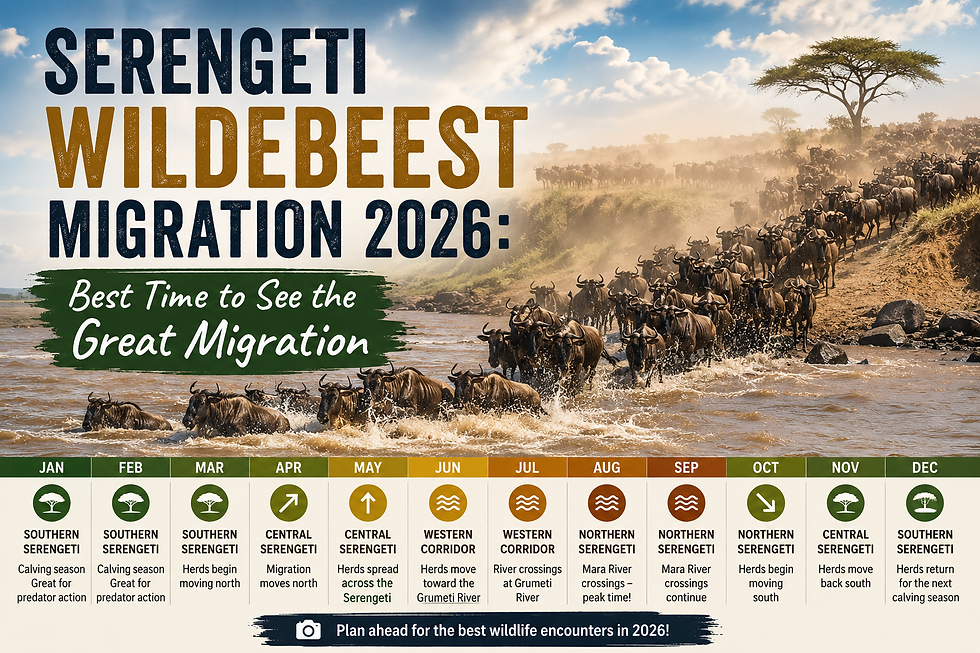
The Great Wildebeest Migration is the strongest argument for combining the two countries. The migration is a circular, year-round event. Depending on when you travel, the herds may be in the southern Serengeti calving, pushing north through the Grumeti corridor, or thundering across the Mara River into Kenya. A combined itinerary means you can follow the migration across the border rather than committing to one half of the story.
Beyond the migration, crossing from Kenya into Tanzania also exposes you to a shift in guiding culture, accommodation style, and safari atmosphere, enriching the overall experience. The two countries operate differently, and that contrast is part of what makes this journey so compelling.
The Ideal 2026 Combined East Africa Safari Itinerary
There is no single correct way to structure a Kenya-Tanzania combined safari, but the most rewarding itineraries follow the natural flow of the landscape and align with wildlife movement patterns. Below is a framework for a 14 to 17-day trip, which can be adjusted based on your travel window, budget, and priorities.
Days | Destination | Key Experiences | Country |
Days 1–2 | Nairobi – Amboseli NP | Elephant herds, Kilimanjaro views, game drives | Kenya |
Days 3–5 | Masai Mara NR | Big Five, river crossings (seasonal), big cats | Kenya |
Days 6–7 | Samburu NR (optional) | Special Five, Ewaso Nyiro River, cultural visits | Kenya |
Days 8–9 | Arusha / Tarangire NP | Elephant herds, baobab landscapes, birding | Tanzania |
Days 10–11 | Ngorongoro Crater | Black rhino, lions, hippos, flamingos | Tanzania |
Days 12–14 | Serengeti NP | Great Migration, leopards, hot air balloon | Tanzania |
Days 15–17 | Zanzibar (optional) | White-sand beaches, spice tours, water sports | Tanzania |
This itinerary is a guide, not a rigid schedule. A good specialist operator will adapt it based on the time of year, the position of the migration, and your personal interests. Those travelling with families may wish to prioritise Amboseli and the Masai Mara. Couples seeking exclusivity may prefer to anchor in the northern Serengeti or private conservancies adjacent to the Mara.
Choosing Between Road and Flying Safaris in Kenya and Tanzania
One of the most important decisions when planning a combined itinerary is how you move between destinations. Both road and flying options are available across Kenya and Tanzania, and many travellers use a combination of the two.
Flying Safaris
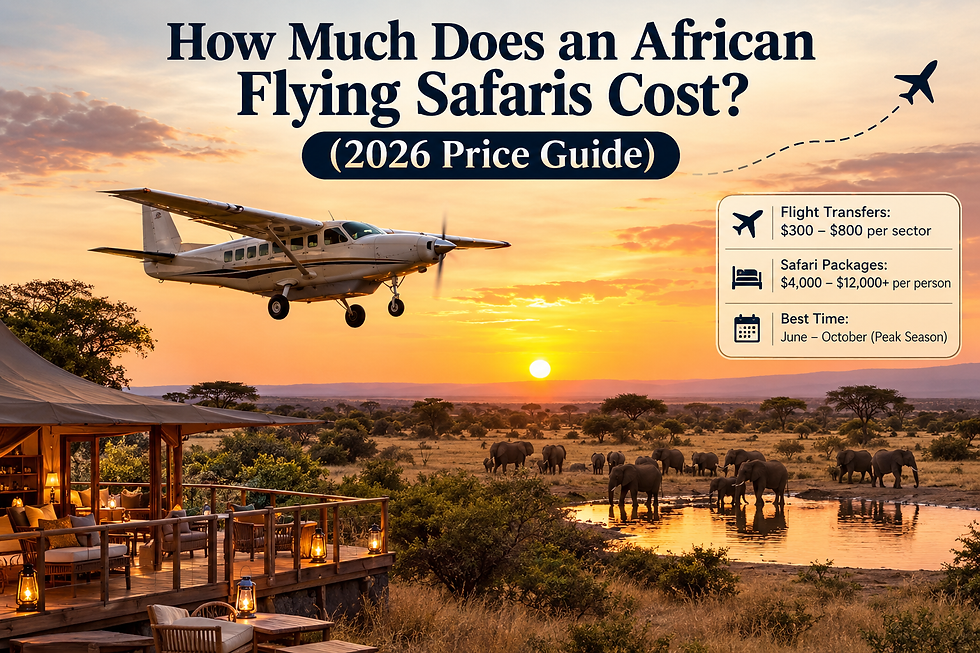
Charter flights between parks and reserves are the fastest and most comfortable way to cover large distances. A flight from the Masai Mara to Arusha, for example, takes around two hours compared to a full day of driving. Flying safaris also maximise your time in the bush rather than on the road, which is particularly valuable on shorter trips. The trade-off is cost — charter flights add significantly to the overall budget, but for most travellers doing a two-country itinerary, they are well worth the investment.
Road Safaris
Driving between destinations in a well-equipped 4x4 Land Cruiser has its own appeal. The road from Nairobi through the Great Rift Valley to the Masai Mara passes through extraordinary scenery, and the journey itself becomes part of the experience. Road transfers are more economical and suit travellers who have longer itineraries and enjoy the landscape between destinations.
For the Kenya-Tanzania border crossing, most operators use the Namanga border point, which is well-established and straightforward with a reputable guide handling the logistics. Flying across the border is also an option for those pressed for time.
Best Time to Do a Kenya and Tanzania Combined Safari in 2026
East Africa's climate means there is genuinely no bad time to visit, but the best time for a combined safari depends on what you most want to witness.
• July to October (peak dry season): The Mara River crossings are at their most dramatic in Kenya's Masai Mara, while the northern Serengeti hosts the tail end of the migration as herds begin pushing south. This is the most popular period and commands premium accommodation rates. Book at least twelve months in advance for the best camps.
• January to March (calving season): The southern Serengeti and Ndutu region in Tanzania are exceptional during this window, with mass wildebeest calving drawing predators in high numbers. Kenya's Amboseli and Samburu are excellent year-round and particularly good in these drier months.
• June (shoulder season): Slightly lower rates than peak, with the Grumeti River crossings beginning in Tanzania's western corridor. Kenya's parks are quiet and game-rich, offering excellent value.
• November to December (short rains): A quieter, greener time with lower crowds. Bird life is exceptional, landscapes are vivid, and both countries offer reduced accommodation rates.
What to Expect on the Kenyan Leg
The Kenyan portion of a combined itinerary sets a very high bar. Kenya's luxury safaris have earned a global reputation for exceptional guiding, intimate camp settings, and outstanding wildlife access, particularly in private conservancies bordering the Masai Mara, where off-road driving and night drives are permitted.
Kenya luxury safaris in the Masai Mara are built around exclusive private concessions such as Olare Motorogi, Naboisho, and Mara North, where guest numbers are tightly controlled, and encounters with lions, cheetahs, and leopards are remarkably consistent. Staying in one of these conservancies means you will often have sightings entirely to yourself, no other vehicles, no noise, just you and the animal.
Amboseli offers a different kind of luxury. The camps here face directly toward Kilimanjaro, and waking up to the mountain's snow-capped peak above a herd of elephants moving through the morning mist is one of the most photographed scenes in African wildlife travel for good reason. It delivers, every single time.
Samburu, in Kenya's northern frontier, is the most remote and arguably the most exclusive leg of any Kenyan itinerary. The terrain is unlike anything else in East Africa, a semi-arid landscape threaded by the Ewaso Nyiro River, home to species found nowhere else on the continent, including the reticulated giraffe, Grevy's zebra, and the gerenuk. Luxury camps here are genuinely intimate, with some properties hosting fewer than twenty guests at any one time.
The Tanzania Experience: Serengeti, Ngorongoro & Beyond
After crossing into Tanzania, the safari shifts in atmosphere. The Serengeti is vast in a way that is genuinely difficult to comprehend until you are standing inside it. At nearly 15,000 square kilometres, it dwarfs most protected areas in Africa, and the density of wildlife predators included is among the highest on the continent.
The Ngorongoro Crater deserves its reputation as one of the world's greatest natural spectacles. Descending into the crater floor, which sits roughly 600 metres below the rim, you find a self-contained ecosystem of around 25,000 animals. Black rhino, lion, leopard, elephant, buffalo, and hippo all coexist in extraordinary proximity. This is one of the best places on the continent to spot the critically endangered black rhinoceros.
Tarangire National Park, often bypassed by first-time visitors, is an excellent addition to any Tanzania leg. During the dry season, the Tarangire River draws huge concentrations of elephant, sometimes hundreds at a time, alongside oryx, lesser kudu, and an extraordinary diversity of bird species. It is Tanzania's most underrated wildlife destination.
Plan Your 2026 Combined Safari With Cheetah Safaris
Planning a two-country safari requires expertise that goes beyond a good travel agent. You need someone with daily, ground-level knowledge of both ecosystems, the migration's current position, which camps are best positioned, and how to navigate the border logistics seamlessly.
Cheetah Safaris is a specialist safari DMC with over 15 years of expertise in East Africa, operating bespoke luxury safaris across Kenya, Tanzania, and Uganda. Their team of certified gold and silver safari guides has an intimate understanding of both the Kenyan and Tanzanian ecosystems, and their combined itineraries are designed to place you in the right park at the right time, in camps that match your travel style and budget.
Whether you are planning a ten-day highlight reel or a three-week deep dive through both countries, Cheetah Safaris designs every itinerary from scratch, with no fixed group departures, no compromises on quality. Speak to one of their safari experts to begin planning your 2026 East Africa journey.
Frequently Asked Questions: Kenya & Tanzania Combined Safari
1. How many days do I need for a Kenya and Tanzania combined safari?
A minimum of twelve to fourteen days is recommended to do justice to both countries without feeling rushed. Seventeen to twenty-one days allows for a more relaxed pace, with time in multiple parks in each country and an optional Zanzibar extension.
2. What is the best time of year for a combined Kenya and Tanzania safari?
July to October is peak season for the Great Migration crossings on both sides of the border. January to March is ideal for Tanzania's calving season in the southern Serengeti. Both countries offer excellent wildlife viewing year-round, with shoulder months offering better value.
3. How do I cross from Kenya into Tanzania on safari?
Most operators use the Namanga road border crossing between Kenya and Tanzania, which is straightforward and well-managed. Charter flights between the two countries are also an option for those who prefer faster transfers.
4. Is a combined Kenya-Tanzania safari more expensive than visiting just one country?
Yes, a combined itinerary costs more due to additional park fees, border logistics, and the need for accommodation in multiple locations. However, the overall value per experience is considerably higher, and many travellers find it difficult to justify choosing just one country after completing a combined trip.
5. Can I see the Great Migration on both the Kenya and Tanzania side?
Yes — that is one of the key advantages of a combined itinerary. The herds spend most of the year in Tanzania's Serengeti, moving into Kenya's Masai Mara between July and October. A well-timed combined safari can follow the migration across the border.
6. Which parks should I prioritise on a combined Kenya-Tanzania safari?
At a minimum: Masai Mara and Amboseli in Kenya, and the Serengeti plus Ngorongoro Crater in Tanzania. Samburu and Tarangire are excellent additions for travellers with more time.
7. Do I need separate visas for Kenya and Tanzania?
Most nationalities require visas for both Kenya and Tanzania, which can be arranged online in advance. Some nationalities are eligible for the East Africa Tourist Visa, which covers both countries (plus Uganda) on a single entry. Check the current requirements with your operator before booking.
8. What should I pack for a two-country East Africa safari?
Neutral-coloured clothing in khaki or olive, a warm fleece for early morning game drives, a light rain jacket, a wide-brimmed hat, quality insect repellent, sunscreen, binoculars, and a soft-sided bag for internal flights. Both countries have slightly different climates, so layering is essential.
A combined Kenya and Tanzania safari in 2026 is not just a holiday, it is one of the most complete wildlife experiences available anywhere on Earth. The planning is worth every detail, and the result is a journey that will define your relationship with wild Africa for years to come.
Comments